
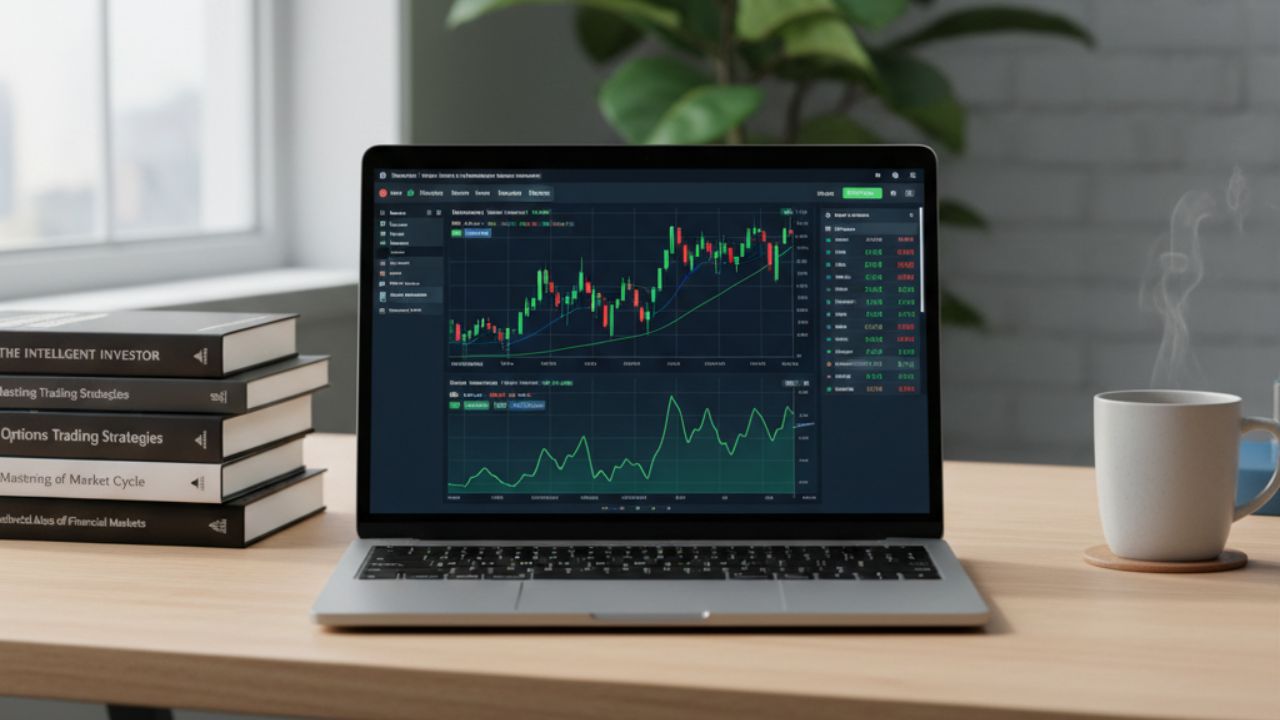
Many investors look at the stock market and see a simple mechanism: buy low and sell high. While buying shares directly is a popular way to build wealth, it requires significant capital to see substantial returns. Options trading offers an alternative path. It allows you to leverage your capital, generate steady income, and even protect your existing portfolio from unexpected market downturns.
Learning how to make money with options trading can seem intimidating at first glance. The terminology is completely different from traditional stock buying. You will hear words like “strike price,” “premium,” and “the Greeks” thrown around in financial news. However, the core concepts are straightforward once you break them down into digestible pieces. You do not need a degree in finance to understand how these contracts work.
This guide will walk you through everything you need to know about options trading. We will cover the fundamental mechanics of how these contracts operate and explore beginner-friendly strategies that focus on risk management. By the end of this post, you will have a clear blueprint for entering the options market confidently and safely.
What Are Options? The Basics Explained
Before you can profit from options, you need to understand exactly what they are. An option is a standard financial contract derived from an underlying asset, like a stock or an exchange-traded fund (ETF). This contract gives the buyer the right to buy or sell that underlying asset at a specific price before a specific date. Crucially, it gives the buyer the right, but not the obligation, to execute the trade.
Every standard equity option contract represents 100 shares of the underlying stock. This multiplier effect is why options provide so much leverage.
Calls vs. Puts
There are two primary types of options: calls and puts.
A call option gives the buyer the right to buy the underlying stock at a predetermined price. You typically buy a call option when you believe the stock price will go up. If the stock skyrockets, you can exercise your right to buy the shares at the lower agreed-upon price, or simply sell the option contract to another trader for a profit.
A put option gives the buyer the right to sell the underlying stock at a predetermined price. You buy a put option when you expect the stock price to fall. If the stock crashes, your put option gains value because you hold the right to sell the shares at a price much higher than the current market value.
Strike Price and Expiration Date
Every options contract has two critical parameters that dictate its value.
The strike price is the specific price at which the option can be exercised. If you buy a call option with a $50 strike price, you have the right to buy the stock at exactly $50, even if the actual market price jumps to $100.
The expiration date is the deadline for the contract. Options do not last forever. They can expire in a matter of days, weeks, months, or even years. Once the expiration date passes, the contract ceases to exist. If the option is not profitable by that date, it expires worthless, and the buyer loses the money they paid for it.
The Premium
The price you pay to purchase an options contract is called the premium. This premium is determined by several factors, including the current price of the stock, the strike price, the amount of time until expiration, and the overall volatility of the market. Buyers pay the premium to acquire the contract, while sellers receive the premium upfront for taking on the obligation of the contract.
How Options Trading Generates Profit
Traders use options to achieve three primary financial goals. Understanding these goals will help you decide which strategies align with your personal risk tolerance.
Speculation
Speculation involves making a directional bet on the market. If you think a company will report incredible earnings next week, you might buy a call option. Because options cost a fraction of the price of buying 100 shares outright, speculation allows traders to see massive percentage returns on small amounts of capital. The trade-off is the risk of total loss. If the stock moves in the opposite direction, the option will expire worthless.
Hedging
Options act as excellent insurance policies for your portfolio. This is called hedging. If you own 100 shares of a company and worry the stock might crash due to a broad market selloff, you can buy a put option. The put option acts as a safety net. If the stock crashes, the loss in your stock value is offset by the massive gain in your put option’s value.
Income Generation
Many conservative investors use options strictly for income generation. Instead of buying options, they sell them. By selling an option, you collect the premium upfront. As long as the stock behaves in a certain way, the option expires worthless, and you get to keep that premium as pure profit. This is highly popular among retirees looking to generate cash flow from their existing stock portfolios.
Top Strategies to Make Money with Options Trading
Now that you understand the mechanics, let us look at the specific strategies you can use to make money with options trading.
Covered Calls
The covered call is widely considered the safest options strategy available. It is an income-generation strategy designed for stocks you already own.
To execute a covered call, you must own at least 100 shares of a stock. You then sell one call option against those shares at a strike price higher than the current market value. You immediately collect the premium. If the stock stays below the strike price until expiration, the option expires worthless, and you keep your shares and the premium. If the stock rises above the strike price, you must sell your shares at the strike price. You still keep the premium, and you secure a profit on the sale of your shares.
Cash-Secured Puts
The cash-secured put is a fantastic way to acquire stocks at a discount while getting paid to wait.
Instead of buying shares at the current market price, you sell a put option at a lower strike price—a price at which you would actually like to own the stock. You collect a premium for selling this put. If the stock stays above your strike price, you keep the premium and do nothing. If the stock drops below your strike price, you are obligated to buy the 100 shares at that price. Because you actually want the stock at that price, this is a win-win scenario.
Long Calls and Puts
This strategy involves simply buying a call or buying a put. It is a directional play. You risk only the premium you pay to enter the trade. Long options offer unlimited upside potential with strictly defined risk. However, you have to be right about the direction of the stock, and you have to be right within a specific timeframe before the option expires.
Credit Spreads
For traders who want to generate income but do not have enough capital to own 100 shares of an expensive stock, credit spreads are the answer.
A credit spread involves selling an option to collect a premium, and simultaneously buying another option further out of the money to cap your risk. By combining these two legs, you receive a net credit to your account. Your goal is for both options to expire worthless so you can keep the credit. Because you bought a protective leg, your maximum potential loss is strictly defined, making this a highly capital-efficient strategy.
Essential Risk Management Rules for Beginners
Options trading carries significant risk, especially for those who rush in without a plan. Follow these core principles to protect your capital.
Start Small
Do not fund your account with your entire life savings on day one. Start with a small amount of money you are completely comfortable losing. Trade single contracts. Learn how prices fluctuate and how it feels to manage an open trade. Experience is the best teacher, and expensive mistakes will quickly end your trading career.
Understand the Greeks
Options prices are governed by a set of mathematical variables known as “the Greeks.” You must understand the four primary Greeks:
- Delta: Measures how much the option price will change for every $1 change in the underlying stock price.
- Gamma: Measures the rate of change of Delta.
- Theta: Measures time decay. Options lose a little bit of value every single day they get closer to expiration. Theta tells you exactly how much value is bleeding away daily.
- Vega: Measures sensitivity to implied volatility. If the market suddenly becomes chaotic, options prices inflate. Vega measures this impact.
Never Trade with Money You Can’t Lose
This rule applies to all forms of investing, but it is doubly important for options. Because options expire, they can go to absolute zero. If you are buying options, assume that every dollar you put into the trade could disappear. Only allocate a small percentage of your overall net worth to speculative trading.
Choosing the Right Brokerage Account
To trade options, you need a brokerage account approved for options trading. Most major brokerages require you to fill out an application detailing your financial experience and net worth before they grant you options privileges.
Look for brokers that offer commission-free trading, robust educational materials, and a paper trading feature. Paper trading allows you to practice buying and selling options with fake money using real-time market data. It is highly recommended that you paper trade for several months before risking real capital. Excellent platforms for beginners include Thinkorswim (by Charles Schwab), Tastytrade, and Fidelity.
Frequently Asked Questions About Options Trading
Can you make a living trading options?
Yes, some individuals make a full-time living from options trading. However, this requires years of education, strict emotional discipline, and a substantial amount of starting capital. It is not a get-rich-quick scheme. Most successful traders aim for consistent, base hits rather than attempting to double their money on every trade.
How much money do you need to start?
You can technically open a brokerage account and buy a cheap option contract with less than $50. However, to effectively use risk management strategies and trade credit spreads, a starting balance of $2,000 to $5,000 is highly recommended. To execute covered calls or cash-secured puts on quality companies, you may need upwards of $10,000.
Are options riskier than stocks?
This depends entirely on the strategy you use. Speculatively buying out-of-the-money, short-term options is incredibly risky and resembles gambling. On the other hand, selling covered calls on stable, dividend-paying stocks is generally considered less risky than simply holding the stock outright, because the premium you collect provides a small cushion against price drops.
Your Next Steps in the Options Market
Making money with options trading requires patience, discipline, and a commitment to continuous learning. You do not need to master every complex strategy immediately. Focus entirely on the basics.
Your first step is to open a brokerage account with a reputable platform and activate a paper trading account. Spend the next few weeks tracking the market. Try selling a paper covered call or buying a paper long put. Watch how the premiums change as the stock moves and time passes. Read up on the Greeks, and review how implied volatility affects contract prices. By treating your options education seriously, you build the foundation necessary to generate real, consistent income in the stock market.